
Why Pools Turn Green During a Texas Summer, and How to Fix It
Why pools turn green during hot Texas summers, and how homeowners in Dripping Springs and Austin can get back to clear, properly balanced water without buying unnecessary products.
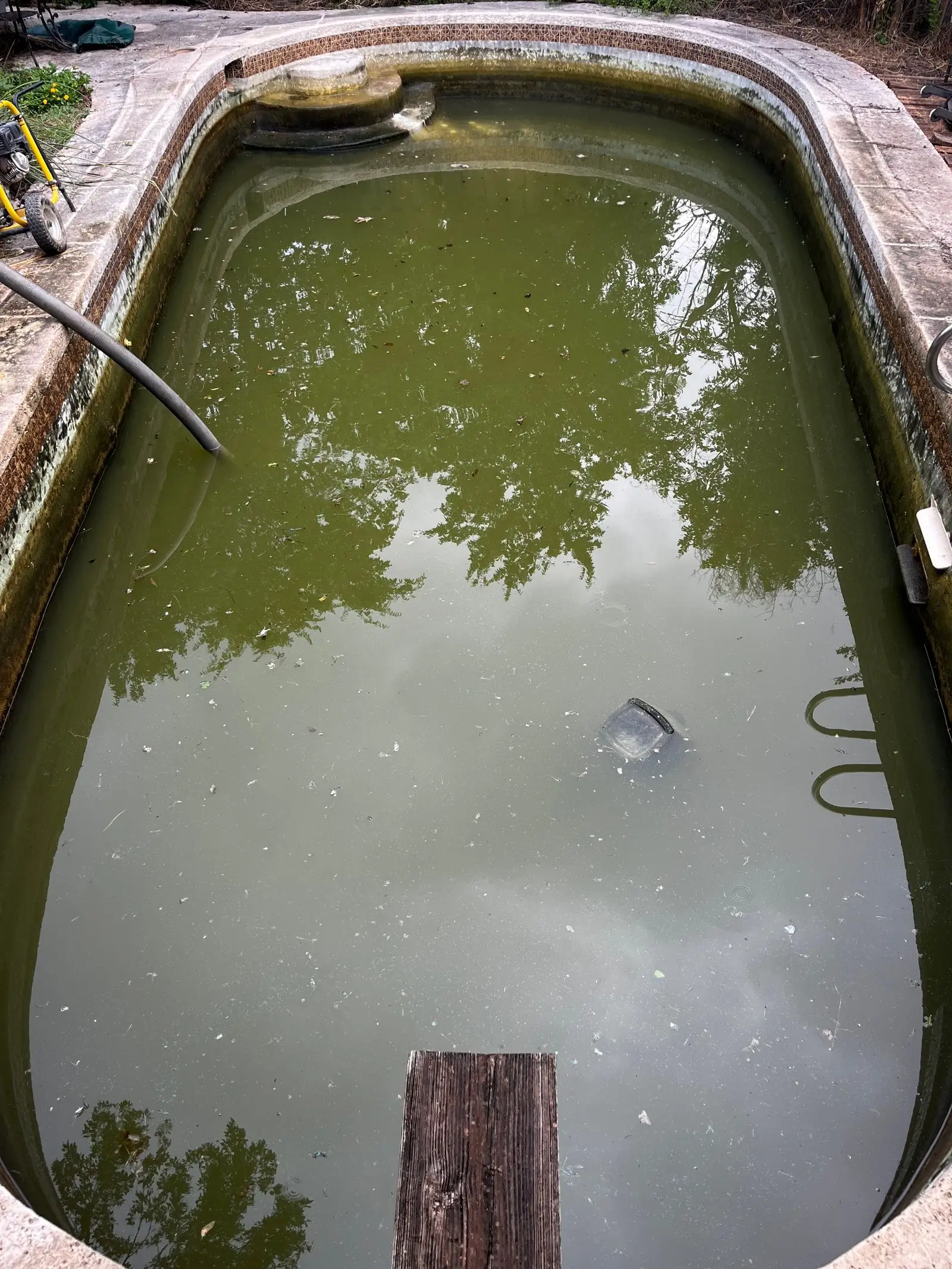
A pool can go from clear to green surprisingly fast during a Texas summer. High temperatures, strong sunlight, thunderstorms, heavy swimming, dogs in the pool, and equipment problems can all affect chlorine levels and circulation.
For homeowners in Dripping Springs and the Austin area, green water usually means the pool’s sanitizer, circulation, filtration, or water balance needs attention.
When this happens, the pool store may recommend several products and several different fixes. In our experience, less is often more. Before adding algaecides, phosphate removers, clarifiers, enzymes, and other specialty products, determine what the pool actually needs.
In many cases, the correct sanitizer level, properly adjusted pH, thorough brushing, good circulation, and a clean filter will do the trick.
Heat and Sunlight Use Chlorine Faster
Chlorine does not last as long when pool water is warm and exposed to strong sunlight. During the hottest part of a Texas summer, a chlorine level that worked earlier in the year may drop much faster.
If the chlorine reaches zero, algae can begin growing before the water looks noticeably green. This is why consistent testing is particularly important during extended periods of hot weather.
A properly maintained stabilizer level can help protect chlorine from sunlight. However, too much stabilizer can also make chlorine less effective. The entire water balance should be considered rather than treating only one test result.
Heavy Rain Can Disrupt Water Chemistry
Texas thunderstorms introduce rainwater, dirt, leaves, pollen, and other organic material into a pool. Heavy rain can dilute the sanitizer and change the pool’s pH and alkalinity.
After a storm, homeowners should:
- Remove leaves and debris from the pool.
- Empty the skimmer and pump baskets.
- Check that the water level is not too high or too low.
- Test the chlorine and pH.
- Confirm that the pump and filter are operating properly.
- Brush areas where dirt and algae tend to collect.
Waiting several days after a major storm can give algae time to spread, especially when the water is already warm.
Dogs and Heavy Pool Use Increase Chlorine Demand
People and pets introduce sweat, oils, hair, dirt, sunscreen, and other organic material that consumes chlorine.
Pool professionals commonly use a rough rule of thumb that one average dog can place about the same contaminant load on a pool as approximately three swimmers. This is not an exact scientific measurement. The actual impact depends on the dog’s size, coat, shedding, and how much dirt it carries into the water.
A large dog with a heavy coat can also introduce a significant amount of hair into the skimmer, pump basket, and filter.
If your dog swims regularly:
- Rinse or brush the dog before it enters the pool.
- Empty the skimmer and pump baskets more frequently.
- Watch for dog hair collecting in the filter.
- Test the chlorine after frequent swimming.
- Clean the filter when pressure or reduced flow indicates it is necessary.
The same principle applies after a pool party. A pool that normally stays balanced may need additional sanitizer and filtration after a high number of bathers.
Poor Circulation Creates Trouble Spots
Pool chemicals need adequate circulation to reach every part of the pool. Clogged baskets, a dirty filter, closed valves, low water, blocked lines, or a failing pump can create areas where algae begins growing.
Steps, corners, benches, tanning ledges, and areas behind ladders are common places for algae to appear first because water movement may be weaker there.
Brushing helps loosen algae and exposes it to the sanitizer. However, brushing alone will not correct inadequate chlorine or an equipment problem.
A Dirty Filter Can Slow the Recovery
The filter removes dead algae and suspended debris from the water. When the filter is dirty or its pressure is too high, circulation may decrease and the water can remain cloudy or green.
Depending on the filter type, it may need to be cleaned, backwashed, or serviced during the recovery process.
The filter removes debris, but it does not sanitize the pool. The sanitizer kills the algae, while circulation, brushing, and filtration help remove it from the water.
Simply running a dirty filter longer will not necessarily clear the pool.
Saltwater Pools Can Still Turn Green
A saltwater pool is still a chlorine pool. The salt cell produces chlorine, but it cannot prevent algae if the cell is scaled, the salt level is incorrect, water flow is inadequate, or the chlorine output is too low for current conditions.
If an automation system says the salt cell is operating but the chlorine remains low, the system may need to be inspected. The cell condition, flow switch, wiring, water temperature, salt level, pump operation, and output settings can all affect chlorine production.
When Fixing a Green Pool, Less Is Often More
When a pool turns green, it is tempting to buy every treatment recommended by the pool store. Algaecides, phosphate removers, clarifiers, enzymes, shock treatments, and other specialty products can quickly add up, and they are not always necessary.
In many cases, the fundamentals will clear the pool:
- Test the complete water chemistry.
- Maintain enough sanitizer to kill the algae.
- Use acid to lower the pH only when testing shows the pH is too high.
- Brush the walls, steps, ledges, and floor thoroughly.
- Keep the water circulating.
- Clean or backwash the filter as it collects dead algae.
- Retest the water until it is clear and properly balanced.
Adding several products at once can make it difficult to determine what is helping. It can also create additional water-balance problems.
Test first, correct what is actually wrong, and give the sanitizer and filtration system time to work.
Never mix pool chemicals together. Always follow the product labels and safe-handling instructions.
Preventing the Next Algae Bloom
The best way to prevent green water is consistent maintenance. Weekly service allows small problems to be identified before they become expensive cleanup projects.
Regular pool care should include:
- Testing and balancing the water.
- Maintaining an appropriate sanitizer level.
- Emptying the skimmer and pump baskets.
- Brushing walls, steps, ledges, and problem areas.
- Vacuuming when needed.
- Monitoring filter pressure and water flow.
- Inspecting pumps, filters, valves, and salt systems.
- Adjusting service after storms, heavy swimming, or frequent dog use.
Need Help Clearing a Green Pool?
If your pool has turned green or keeps developing algae, Firefighter Pools can determine whether the problem is water chemistry, inadequate circulation, filtration, heavy pool use, or failing equipment.
Written by Firefighter Pools