
15
Years in the fire service
100%
Firefighter technicians
BBB
Accredited business
CPO
Certified owner
How we find it
Four steps, and only the last one involves a shovel
- 01
Rule out evaporation
A bucket test over a couple of days establishes whether there is a leak at all. A surprising number of calls end here, and that is a good outcome.
- 02
Separate shell from plumbing
Where the loss continues with the equipment off, it is the shell or a fitting. Where it changes with the pump, it is the plumbing or the pad.
- 03
Narrow it to a line
Pressure testing individual lines tells us which one is losing, so the search area goes from a whole yard to a few feet.
- 04
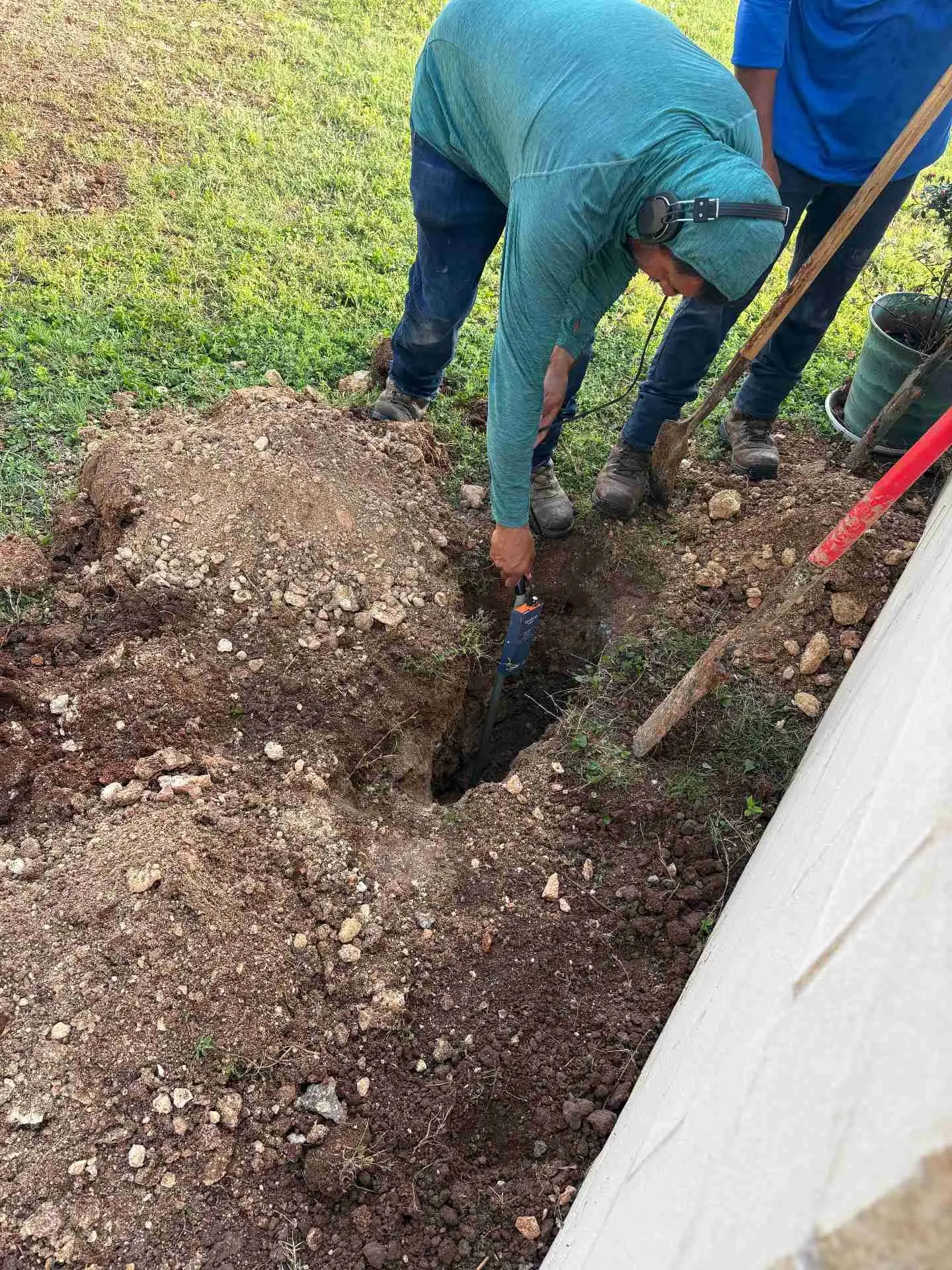
Open it up and repair
Only then, and only where the test points. Backfilled and made good afterwards.
Where they hide
Most leaks are in three places
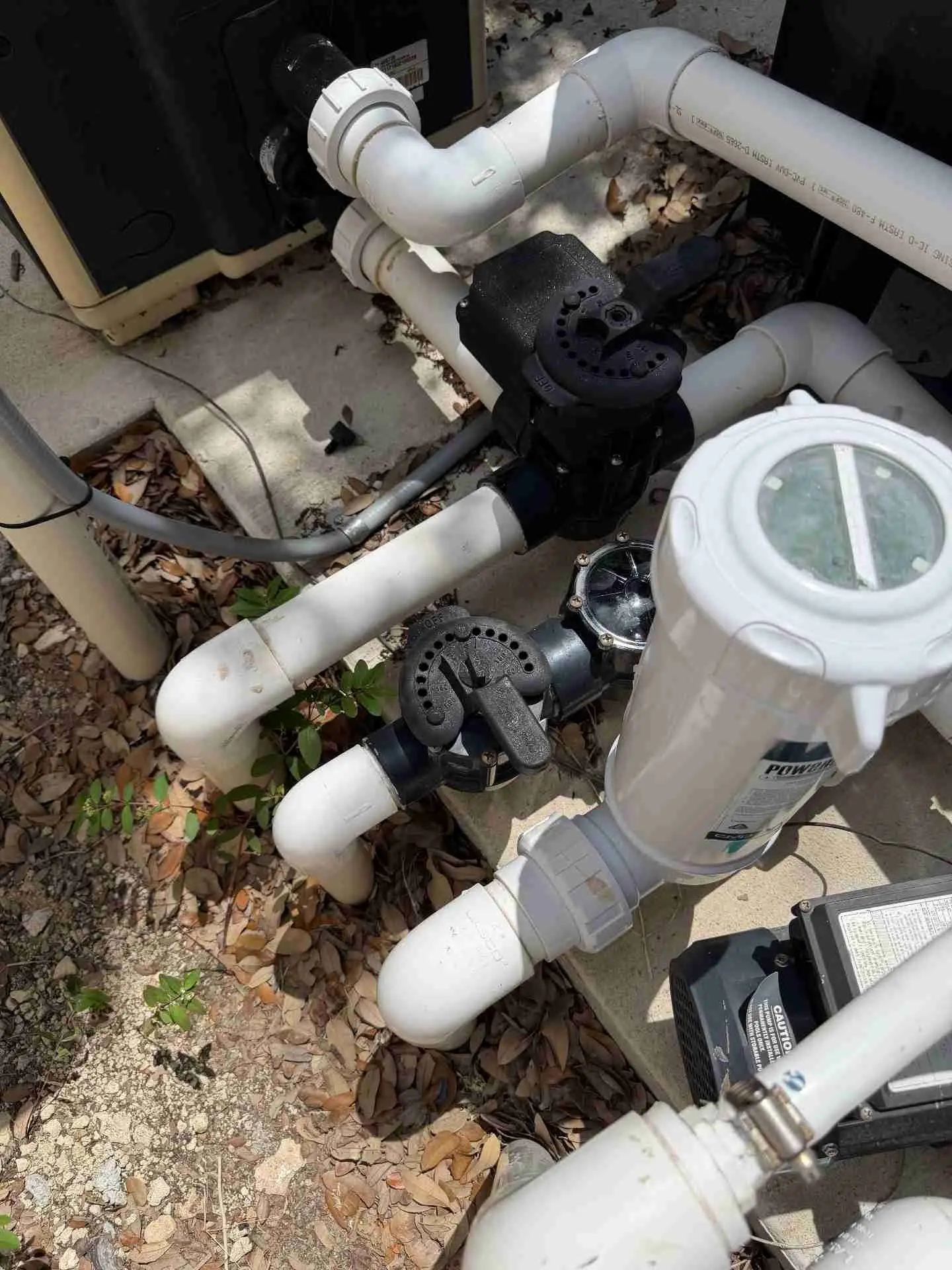
The equipment pad is first and the easiest: unions, valves, seals and the pump itself, all above ground and all visible once you look.
Then the plumbing runs, which is where excavation comes in. Then the shell itself, at skimmers, returns, lights and the fittings set into the structure, which is more common than people expect and often the cheapest to put right.
- Pad: unions, valves, seals, pump
- Plumbing: suction and return lines under the deck
- Shell: skimmer throats, return fittings, light niches
Questions
What people ask about leaks
How much water loss is normal?
A pool loses water to evaporation every day, and in a Texas summer with wind and heat that can be more than people expect. What matters is whether the loss is more than evaporation explains, which is a measurable thing rather than a guess.
How do you tell a leak from evaporation?
A bucket test, done properly over a couple of days: a bucket of pool water sitting on a step loses water to evaporation at the same rate the pool does. If the pool drops faster than the bucket, something is leaking.
Do you have to dig?
Only when the tests say the water is going into the ground through the plumbing, and only where they say it is going. Most leaks are found without excavation, and several turn out to be at the equipment pad where nothing needs digging at all.
Can a leak damage more than the water bill?
Yes, and that is the reason not to leave it. Water moving through the ground takes chemistry and heat with it, undermines decking and can soften ground around the shell. The bill is the least of it.
My water level drops but only when the pump runs.
That is a useful clue and worth telling us. A loss that only happens under pressure points at the return side; a loss that happens with the pump off points elsewhere. Which one it is narrows the search considerably.
Request service
Tell us how fast it is dropping
Roughly how much you are losing, over how long, and whether it changes when the pump runs. We will call you back on the number you leave.
Rather talk it through? (408) 316-8425