
15
Years in the fire service
100%
Firefighter technicians
BBB
Accredited business
CPO
Certified owner
Before the freeze
What gets done, and why each part matters
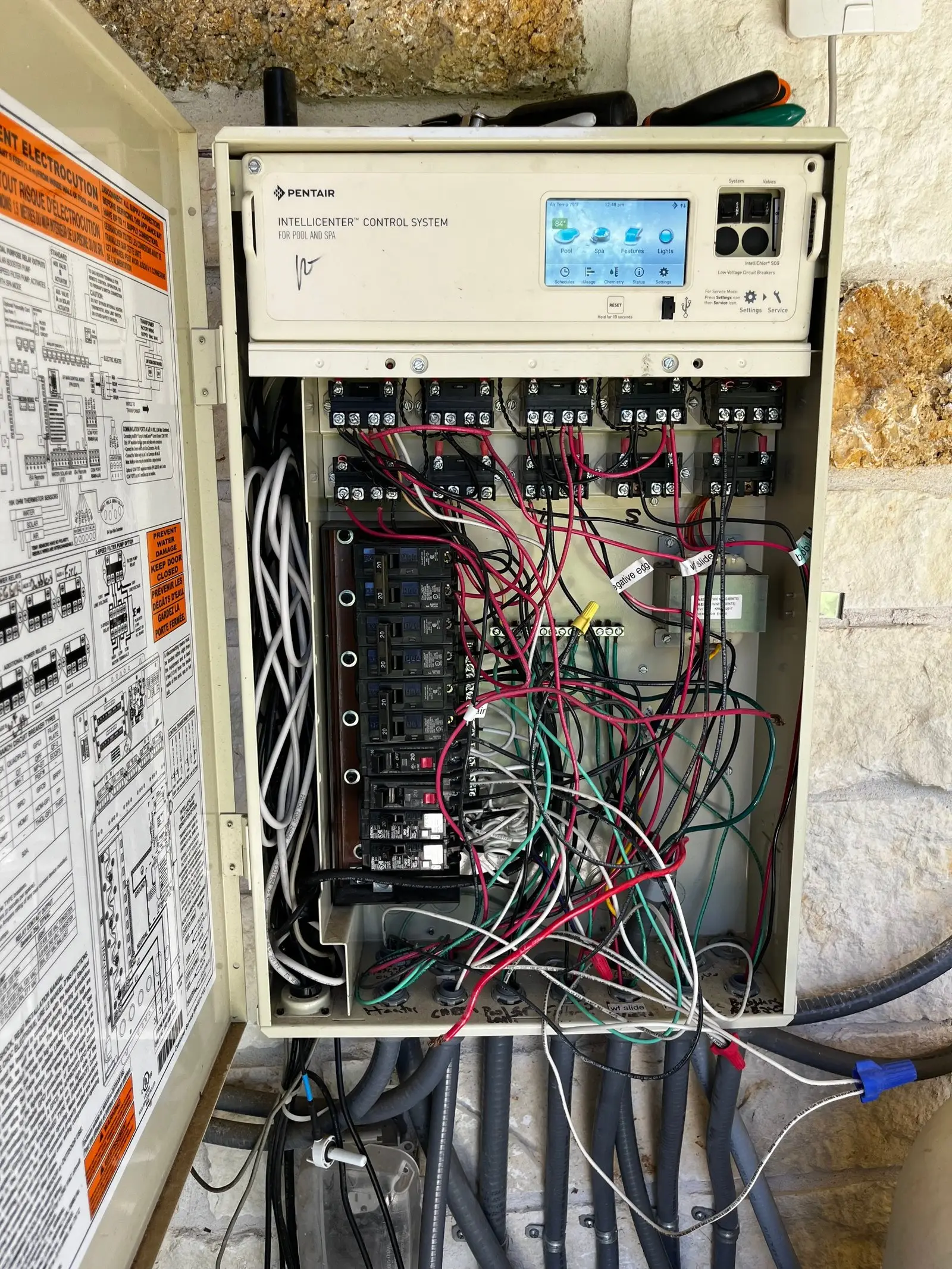
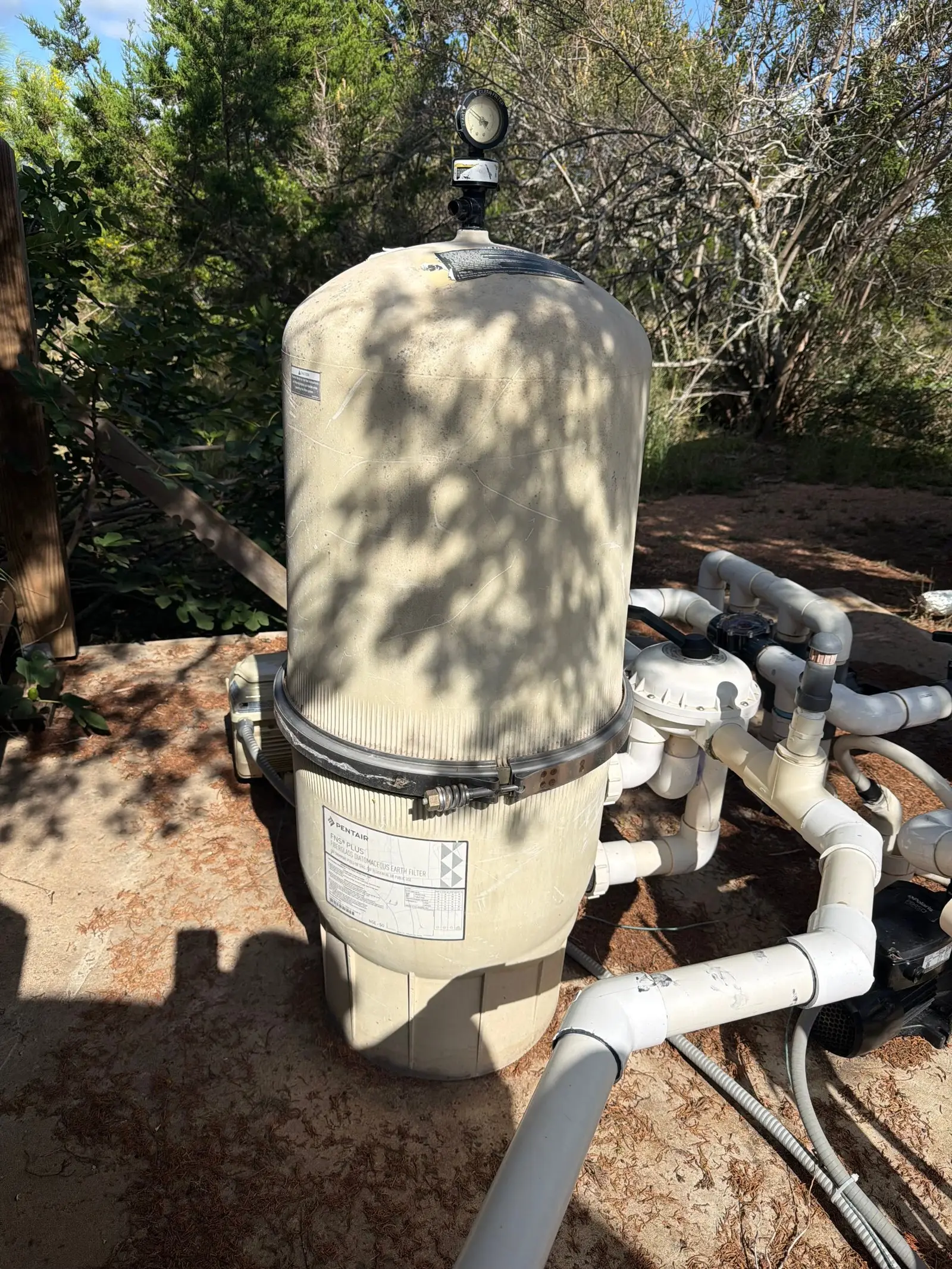
Water expands as it freezes, so the risk is anywhere water can sit still in something rigid. That is the pump housing, the filter tank, the heater, the salt cell and every exposed run of pipe on the pad.
Running the pump helps, and it is the right first answer. What it does not cover is equipment isolated behind a closed valve, and it stops covering anything at all the moment the power goes out.
- Valves set so water keeps moving through the whole pad
- Exposed plumbing and fittings insulated
- Hand warmers staged on pumps and pipes ahead of a cold snap
- Pump, filter, heater and salt cell protected
- Freeze protection on the automation checked, where there is any
- Water level set right, so skimmers are neither flooded nor drawing air
Through the cold months
What happens when the forecast turns
- 01
Nothing gets shut down
The pool stays in service. Water keeps moving, which is most of the protection, and there is no point in the year when the system is sitting still.
- 02
The pad is ready before the forecast is
Valves set so water keeps moving through the whole pad, exposed plumbing and fittings insulated, and the automation's own freeze protection checked where there is any.
- 03
You have a number during it
If something starts making a noise it should not, call. We would rather hear about it at the time.
- 04
The visit after is a check
A split fitting looks fine while everything is cold and still. The next visit runs the equipment up and watches it under pressure.
Through the winter
The pool that comes through a freeze is the one that was never out of service
Most of the protection is circulation, and a pool on weekly service already has it. Nothing is drained, nothing is covered, and there is no shutdown waiting to be reversed in spring.
The rest of it is somebody looking at the equipment often enough to know its condition before a forecast rather than during one. Freezes here arrive with a few days of notice and everybody calls at once.
It matters afterwards as well. A cracked housing or a split fitting can look fine while everything is cold and still, and only shows once the system is back under pressure and pushing water through the crack. That is what the next visit is for.
- Water kept moving all winter, which is most of the protection
- Equipment seen every week rather than once a season
- Damage found on the next visit rather than in spring
Questions
What people ask about freezes
Do pools in Central Texas really need winterizing?
Not in the way a northern pool is closed for the season, but yes for the freeze events. The damage here comes from a few hard nights rather than a long winter, and equipment that would be fine in a normal January can split in one of them.
What actually breaks in a freeze?
Water expands when it turns to ice, so anything holding still water is at risk: pump housings, filter tanks, heaters, salt cells, exposed plumbing and the fittings between them. The shell is usually fine. The pad is what costs money.
Should I just leave the pump running?
Moving water is much harder to freeze, so running the pump through the cold is the standard advice and it is largely right. It is not a complete answer: it does nothing for equipment that is isolated by a closed valve, and it fails entirely if the power goes out, which is exactly what happens in the worst events.
How much notice do you need before a freeze?
As much as you can give. Everyone calls at the same time when a hard freeze is forecast, so the week before is comfortable and the night before is not.
Do you shut the pool down and open it again in spring?
No. It stays in service through the winter. Shutting the system down would stop the circulation that protects it, so the visits carry on through the cold months and the pool is never sitting waiting to be restarted.
Get on the route
The freeze plan is weekly service that does not stop
Tell us where the pool is and whether it has automation. We will call you back on the number you leave and talk about what weekly service through the winter looks like for it.
Rather talk it through? (408) 316-8425